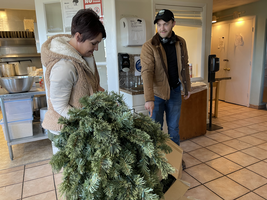
 While the holidays represent a cherished moment in the year to share with family and friends, they can also be full of stress and difficult challenges for many people. The participants in Gemeinschaft Home’s residential programs are in a moment of transition, whether exiting incarceration or joining the program to tackle personal struggles with mental health and substance abuse. The majority are physically separated from their families and loved ones during this season, which adds yet another obstacle to overcome during the holiday season. Over the years, the Gemeinschaft Home community has sought to create a comfortable home environment for residential participants, an atmosphere that is readily noticeable to all visitors who come through the front door of the men’s home on Mt. Clinton Pike. The women’s home on Old South High Street has also taken on a warm and cozy vibe as the program and facilities have continued to develop this year. Participants in both houses have spent time this month adding holiday decorations, including a Christmas tree, window wreaths, and other elements, which has contributed to a positive seasonal vibe. Residents continue to work and participate in program requirements during this time, but overall, there is a slower place, giving everyone a chance to relax, enjoy televised sports games or movies, and just spend some downtime together. The staff also strives to make the season special, which is especially important for those participants who have lost family members during the time they were incarcerated or have become alienated from them and are in the process of reestablishing connections with parents, significant others, and children. For Thanksgiving this year, Gemeinschaft Home’s residential participants received a truly wonderful gift—a fully home cooked Thanksgiving Day dinner. Instead of taking the day off to be with her own family, Theresa Jarratt (food service manager) spent the morning of (and the days prior to) Thanksgiving preparing an enormous spread of traditional foods for the occasion, including roasted turkey and ham and familiar side dishes such as mashed potatoes and candied yams. Everyone convened at 1PM and enjoyed the great feast together in one of those rare instances when all the participants were in the home at the same time. Generally, the wide variety of work schedules prohibit such a large gathering, but Thanksgiving Day provided such a moment. The smells of good food wafted through every corner of the house, combined with the sounds of football games on tv, and relaxed conversations and laughter. Even though they residents could not be with their families that day, they were able to mark the occasion with a fantastic home cooked meal, surrounded by others in celebration—and they got to enjoy the leftovers throughout the weekend! There are a few special more special treats in store for the Gemeinschaft Home residents to celebrate the remainder of this holiday season with joy and in the spirit of giving and fellowship. We strive to make it truly a home for our program participants, not just during the holidays, but throughout the whole year, as well!  An increase in recent social media posts about Gemeinschaft Home are thanks to the hard work of a dedicated group of university students during Fall 2021 semester. Bluestone Communications is a public relations firm comprised of advanced students studying at James Madison University’s School of Communication Studies, under the leadership of Dr. Isaac Woo.
Each semester, local businesses and organizations apply to work with Bluestone Communications on a public relation project that benefits the organization and gives the students valuable real-world experience. While Bluestone Communications usually charges a small fee for their services, as a community-based nonprofit, Gemeinschaft Home was honored to be selected as a pro bono client this year. Bluestone Communications spent months working with Gemeinschaft Home staff to develop and execute a plan to increase information published on Gemeinschaft Home’s social media platforms—Facebook and Instagram—as well as spreading awareness among JMU students in an on-campus event this month. The team members created original content, including photographs, video, and language about our residents and programs, as well as a schedule structure for future posts. Faculty Director Dr. Isaac Woo James Madison University School of Communication Studies Team Members Helen Nguyen (Account executive) Morgan Pecoraro (Account coordinator) Brianna Palmer (Account associate) Kendall LoMauro (Account associate) Megan Barton (Account associate) Morgan Vuknic (Intern) Katelyn Arney (Intern) A Natural Space for Healing and Reflection 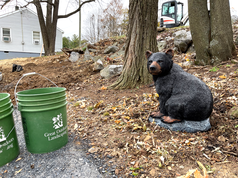 Construction has been ongoing throughout the fall on our new therapy garden, a calming space designed to foster peace and tranquility for program participants. The garden was made possible through donations from the 2020 Vision for the Future fundraising campaign, as well as subsequent contributions, and will be finished in spring 2022. Located behind the men’s home on Mt. Clinton Pike, the therapy garden will occupy a large space on the property and provide stunning views of the mountainous panorama and farmlands surrounding Gemeinschaft Home. Divided into “rooms” the garden will feature concrete and wooden seating structures, statues, a variety of shrubs and plants, and a water feature near the back end. Great Outdoors Landscaping, LLC has been hard at work throughout the fall months, laying the groundwork for handicap accessible paths—both brickwork and crushed gravel—which includes stone walls as well. The remaining plant life will be arranged and planted during the spring 2022 months. We look forward to welcoming you to our new garden this spring/summer! Gemeinschaft Home's women residents relax and have some fun at home! 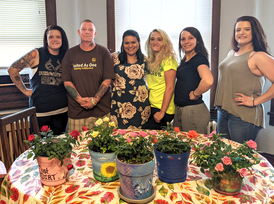 Day to day life is quite structured for women enrolled in the residential program. While not required to work, all participants are encouraged to maintain active employment, and most do so in conjunction with the program group sessions (life recovery curriculum), community service obligations, and other court-mandated and outside treatment requirements. Yet, case manager Michelle Roberts stresses the importance of establishing a healthy home environment for residents during their free time, just to acclimate them to the idea of home as a safe and stable refuge from the world, a source of social well-being and support—and even fun! Roberts often organizes evening group sessions that are designated as “home activities,” including sessions in which residents work together outside on a gardening project, play games, have a movie night with popcorn, or do self-care groups with face/mud masks, etc. Whatever the activity, the goal is to provide participants with a model for living beyond the streets. These moments provide an opportunity for stress relief and respite from the outside world, and they also contribute to the overall growth of everyone in the program. Do you ave an idea for a fun activity and would like to volunteer an evening of time with Gemeinschaft Home’s residents? Let us know! A Conversation with one of the first graduates of Gemeinschaft Home’s residential program for women. 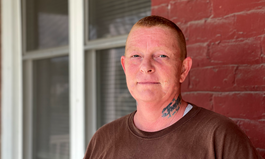 For over two decades, 44-year-old Christina “Chris” Ongaro was always moving—most often on foot—from one place to the next. “I’ve just always walked everywhere. Whenever something happened to me in life, I just started walking,” she explains.
However, the destination was always the same—anywhere she could obtain alcohol and crystal methamphetamine—and other concerns, such as where she would sleep that night or where she would go the following day, were a lower priority. “I would help cover some rent here or there, to sleep on a sofa or have a place to stay for few nights, and then I would figure out something else later,” Ongaro says, adding that sometimes she would be awake for days before finding a place to sleep, and then the cycle would start over again. “I didn’t want to feel anything at all. I just wanted to escape.” In such moments, Ongaro would sometimes shoplift items from various stores, often just because she felt emboldened to do so, but also to support her addictions. She always wanted to be surrounded by substance abusers, noting that she willfully avoided family members and loved ones, to spend time exclusively with others actively submerged in their addictions. Occasionally, she would face a drug possession (or other low-level) conviction and serve time behind bars, only to return to the streets when she was released from incarceration. Ongaro is originally from Florida and moved permanently to Virginia about 16 years ago. While she did not discuss her personal/family life or childhood at length, Ongaro revealed that she had grown up in a toxic home environment, with an abusive father who terrorized both her mother and siblings. She spoke specifically about her father’s violent attacks on her mother, episodes that she witnessed firsthand as a child, and how those experiences shaped her relationship with her mother as an adult. Battling a variety of health problems of her own in recent years, Ongaro’s mother relied on her heavily for ongoing care, which she managed despite being active in her own addiction. Her mother was one of the few constants in her life. Yet, she could no longer care for her mother after she was incarcerated again at the Virginia Correctional Center for Women in Goochland in 2017. By the time Ongaro was released in August 2020, her mother had passed away, a shocking reality that made staying sober and off the streets impossible, and she started to spiral downward nearly immediately. She had returned to Harrisonburg on probation, but she had nowhere to live. After a brief (unsuccessful) stay at a local Oxford House, she resumed her usual pattern of moving from one place to another. She was enrolled in the Gemeinschaft Home Day Reporting Center (DRC) program, but without a stable living situation, she struggled to gain much from the experience and admitted to continuously using drugs, despite regular testing requirements. Faced with termination from the program, she attempted a stay at Arbor House in Harrisonburg, to get stabilized, but she left after realizing that her substance abuse problem was more pressing than the mental health concerns that were addressed there. Ongaro was out of options, and she recognized that she was in violation of her probation conditions (i.e., using drugs and not completing a mandated program). She understood well that the upcoming check-in with her probation officer—just days away—would result in another stint behind bars. With nowhere else to turn, she made the decision to turn herself in early, and in December 2020, she started a six-month sentence at the Rockingham-Harrisonburg Regional Jail as punishment for her probation violation. Fortunately, when she was released in May of this year, she had a new opportunity for help, one that had not existed only a few months prior—the newly established women’s residential program at Gemeinschaft Home. With a seven-year prison sentence still hanging over her head, time she would serve if she violated the terms of her probation again, Ongaro needed urgent help to remain clean and sober and to establish a new direction for her life, which necessitates the safety, security, and structure of a residential program. For Ongaro, who has spent her entire adult life with no sense of stability or consistency, the opportunity to be in full-time residential program with 24/7 support has been a life changing experience. Today, she is one of the first women to successfully complete the 90-day program, but the journey has presented several challenges. “I admit that I was not easy for the staff to handle sometimes,” Ongaro says, citing one incident when everyone in the house lost their pass time privilege (several hours of personal time away from the house) for not completing household chores. She exploded in anger, shouting at other residents and staff members, and the episode concluded in a one-on-one discussion with her case manager, Michelle Roberts, who Ongaro argues is the single reason she finished the program. “Michell told me, ‘I am going to keep believing in you until you start to believe in yourself,’ which really stuck with me,” Ongaro says. Primarily, Michelle has helped her to understand the importance of processing emotions, something that Ongaro always managed to avoid—walking away from conflict and escaping into drug and alcohol abuse. “I needed to learn how to hit the pause button, to reflect on a situation before acting on it,” she explains. The life-recovery group sessions have reinforced concepts like this, and while discussing personal emotions has been a new experience for Ongaro, she stresses the importance of having a strong circle of social support to do so. She is now a graduate of the program, but she will continue some of the structure she established while living at Gemeinschaft Home, such as still participating in the day reporting program, attending AA meetings twice a week and a drug abuse group session once a week. She will also maintain her current employment with Mercy House in Harrisonburg—a position she was offered after completing some community service hours there while in the program. But she also plans to visit Gemeinschaft Home in the future, to mentor future residents, saying, “If this program can help me to change, it can help anyone to change.” Ongaro states unequivocally that without the Gemeinschaft Home program, she would not be where she is today: sober, employed, and ready to move into her own home. She knows the road ahead is going to have some sharp turns, but she has a stronger foundation than ever before to grow roots and build a life. Gemeinschaft Home staff participate in a summer workshop to learn more about trauma and trauma-informed care. 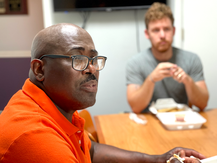 Definition of Trauma Individual trauma results from an event, series of events, or set of circumstances that is experienced by an individual as physically or emotionally harmful or life threatening and that has lasting adverse effects on the individual’s functioning and mental, physical, social, emotional, or spiritual well-being. (SAMHSA definition 2014) Professional development opportunities such as ongoing certification programs, college coursework, and community-based workshops help to keep staff members informed on new and best practices, particularly in the fields of substance abuse and mental health.Staying up to date on such knowledge and approaches is vital for us to provide the best possible services to the individuals we serve. In June, Gemeinschaft Home program staff participated in a one-day workshop led by Brandy Haden, Behavioral Health and Wellness Coordinator with the Harrisonburg-Rockingham Community Services Board. Largely based on research from SAMHSA (Substance Abuse and Mental Health Services Administration), the workshop, “Surviving and Thriving: Trauma and Resilience,” gave staff members a chance to define and discuss trauma as a concept and as a significant factor in the lives of many program participants. Staff members learned about signs and symptoms of trauma, as well as some of the key components of trauma that individuals experience and how they affect their behavior and actions. While staff members cannot formerly diagnose an individual with trauma, having a more informed perspective enables them to connect participants with necessary resources more readily. Many formerly incarcerated individuals have experienced trauma, both throughout their lifetimes and during incarceration, and face numerous challenges when transitioning back to life after prison. Many have never had any formal treatment interventions to cope with such experiences as well. Knowing more information about various types of traumas and the risks involved will help Gemeinschaft Home staff provide better guidance (such as referrals to appropriate services) for the individuals we serve in both the residential and non-residential programs. Local nonprofit brings music to the women’s program. 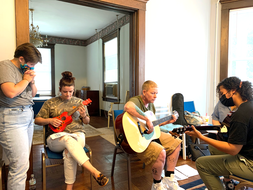 In addition to life recovery group sessions and community service obligations, all residents also participate in various enrichment activities that help build on the tools they gain in the program.
Since the opening of the women’s program early this year, residents have had several opportunities to work with volunteers in workshop settings on topics including self-defense instruction, creative writing, arts and crafts, as well as a music collaboration. Amplify Music, a local nonprofit founded by Rebecca Kenaga, a recent JMU graduate who worked on previous music collaborations with the Gemeinschaft Home male residents, also began working with the participants in the women’s program in late spring. Amplify Music focuses on individuals in crisis, particularly those have been incarcerated, using music engagement as a mechanism for social change, and they offer services in education settings as well. “When someone who has faced incarceration, homelessness, abuse, addiction, and trauma realizes they are capable of creating something beautiful out of themselves, they realize they are also beautiful and capable of doing many other things they might not have acknowledged before,” says Kenaga. Throughout the summer, Kenaga and her colleagues offered weekly music sessions in which residents composed lyrics and music in structured activities to foster collaboration and discovery. With support of several recent grants, Amplify Music also provides resources such as musical instruments, recording equipment, and even digital devices such as tablets and Chromebooks to facilitate each resident’s involvement in the creative process. We look forward to sharing more with you about this ongoing collaboration! For more information about Amplify Music, visit www.amplifymusicva.org. Gemeinschaft Home welcomes first women residents in February.  The women’s home, located at the Dean House (110 Old South High Street) officially launched with its first cohort of women in February, but there was much preparation of the household that took place in January. While the lower level of the house recently had been used as office space for several organizations, the upstairs had only been used intermittently as a residential space, and rarely (if at all) since the start of the COVID-19 pandemic in early 2020. Gemeinschaft Home staff, volunteers, and a number of current residents in the men’s home worked diligently to get the space ready for the new women residents, including cleaning, painting walls, installing blinds and A/C units, moving and arranging furniture, equipping the kitchens, and setting up the office spaces necessary to run the program on a 24/7 basis. Like the existing men’s program, participants are required to complete a series of life-recovery group sessions, participate in community service hours and enrichment activities, contribute to household chores, and fulfill other probation obligations and conditions (such as attending counseling sessions with a medical professional). Women enrolled in the existing day reporting program have also started to meet their case manager at the Dean House and to attend the same group sessions along with the women residents. One unique quality of the women’s programming at Gemeinschaft Home (both residential and non-residential) is that the participants stay in the local area upon completion—which provides the possibility for aftercare and follow-up that is far more difficult when they leave the area. Gemeinschaft Home has found a house in downtown Harrisonburg to launch a new residential program for local women.  With enough money raised so far in the 2020 Vision for the Future Campaign, along with partnerships with local public agencies, Gemeinschaft Home settled this month on a location to establish a residential program for women in Harrisonburg. Until now, there have been no residential services available to women under community supervision or probation in the local area, such as the men’s re-entry program already offered at Gemeinschaft Home, and the new program provides a location to fill that critical need in the community. The brick, two-story (with wrap-around porch) home, also known as “Dean House,” is located at 110 Old South High Street, on the corner of W. Water Street. The property is currently owned by Community Mennonite Church, who has come to an agreement with Gemeinschaft Home to establish the program in the house, located just across the road from the church. The large, early-twentieth century house features spacious rooms, two kitchens, and several bathrooms, offering both living and office spaces that include ample room for group meetings and activities. The residential program will offer an alternative to incarceration for women in the local community who have been charged with and/or convicted of nonviolent offenses and are facing housing instability or are homeless. Program participants will be referred from the local Court Services Unit, Drug Treatment Court Program, and Joint Mental Health Collaboration, as well as from Gemeinschaft Home’s existing day reporting center program for women. Up to four adult women will reside in the house for a minimum of 90 days and will receive full-time access to room and board, including meals and related resources. Participants will share household chores and cooking responsibilities. The minimum 90-days will require participants to complete a cognitive-behavioral life-recovery curriculum that covers a wide range of topics in a group setting, from parenting education, to living with addiction, interpersonal communication, and anger management. All participants will also work one-on-one with a case manager to develop goals, determine a home plan, and address issues on an individual basis. They will make referrals for participants who need outside resources such as licensed counseling, health care providers, peer support specialists, and community groups such as Alcoholics Anonymous meetings. Individuals will have access to employment advice, vocational training opportunities, and help with finding a nearby job. All participants will be subject to random drug and alcohol screens. Gemeinschaft Home hopes to welcome the first residents by early February 2021, after some initial preparation takes place in the house through January, which includes hiring essential staff, painting walls, and procuring household furniture and other necessary items. We will share more updates about the progress of the new residential program for women in the new year! Former residents of the program talk about life and work after Gemeinschaft Home in the Year of COVID-19. 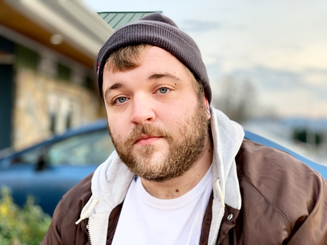 Former residential program participant, Daniel Canterbury. he future is never entirely clear for anyone—no matter what direction we take or what choice we make in life—but the prospect is all the more uncertain for the majority of individuals coming out of incarceration. Finding a stable place to live and a job, reconnecting with estranged family members and loved ones, and maintaining sobriety (for those who struggle with addiction) are formidable obstacles but doing so in 2020 has presented an even greater challenge for those making a transition back into the community. The economic impact of the COVID-19 pandemic—leading to millions of job layoffs and eviction notices—is made all the worse by the staggering number of infections and deaths, that have overburdened the healthcare system and ravaged families with the loss of loved ones, in the wake of the most significant healthcare crisis in 100 years. This was the situation facing former residents Daniel Canterbury, 28, and Jeremy Hill, 36, when they finished the Gemeinschaft Home program last spring. Yet, their time spent in the program has helped to provide a solid foundation for a new start, and so far, they are still on stable ground.  Former residential program participant, Jeremy Hill. While they both had been incarcerated for drug-related convictions, neither struggled with addiction, which is often the focus of many individuals who go through program. But both emphasize how the house structure and program curriculum provided a chance to gain some valuable tools for living, while also working to save money to live independently after they finished. Taking on leadership roles as senior house representatives, Canterbury and Hill actively participated in the community aspect of the program and helped to orient new residents, manage household chore schedules, and take on extra responsibilities, such as being the house cook on the weekends.
Both men have a background in the restaurant and food industries, and they worked in related jobs while they were living at Gemeinschaft Home. Plans after the program included establishing a food truck business for Hill, who finished in February, and assisting with the launch of a new local restaurant location for Canterbury, who exited the program in late March. However, the Covid-19 pandemic forced both to switch gears and find an alternative. Luckily, both have found a place to thrive, despite the enormous impact on the food service industry resulting from the COVID-19 pandemic over the past nine months. Canterbury is a cook locally at the Thunderbird Diner in McGaheysville, nearby his home and family in Elkton. Hill now lives in Abingdon, Virginia, and is the sous chef at Commonwealth Senior Living. There are still barriers that each man faces day-to-day, and both are still working—nearly a year later—to get their driver license reinstated. Hill points out that limited hours and appointments at the DMV make it nearly impossible to complete the road test, as Saturday is his only day off each week, even though he finished the written test some time ago. Canterbury supports several children, and his partner is currently expecting another child in the upcoming year. He is still repaying court fines, and he will come off probation when he does so, but he continues to make steady progress. When asked to reflect on their time in the Gemeinschaft Home program, both pointed to the community structure and how the individuals in the house function as a unit. Both Hill and Canterbury benefitted from and contributed to the family-structure, whether they were helping another resident fill out paperwork or assisting a new resident to learn the rules and to find his way around the house. Canterbury points out, “Gemeinschaft Home provided a community in which I could apply myself and gave me a sense of acceptance that I would not have had coming out of jail with nothing.” Hill referred to his experience as a stepping-stone between prison and life in the community, one that he urgently needed to soften what would otherwise be a very stressful moment. He says, “This is a good decompression, too, because we are coming out from being told when to eat, when to work, when to wake up, when to take a shower to…boom…life!” He adds, “You worry about how society is going to look at you, too, at first, when you first get out and you think about that like, ‘Man, is it going to be hard to get a job? What’s it going to be like now?’ I was stressed, but every day got less and less stressful.” The two men became friends while in the program, and still keep in touch. They both also share the same goal—to live a normal life again. To the broader community, Hill says, “We’re just guys trying to start over and get some structure. We’re not all bad people; we just made a bad decision. I am here to succeed and to move on with my life, and that’s all I need to do.” |


